
As a nutritionist, I repeatedly come across statements about gastric acid, vitamin B12, general nutrient deficiencies and even Helicobacter pylori that can leave many people feeling confused or concerned. The following thoughts are based on my professional knowledge and understanding, my practical experience and my observations in everyday life.
In today’s flood of information, it can be difficult to maintain an overview. Yet many things are less complicated than they are sometimes presented or perceived. Often, even simple connections and small changes can make a valuable contribution to our health. With this article, I would therefore like to explore these topics in an understandable way and explain the underlying connections.
My aim is to provide knowledge and understanding rather than to give ready-made answers. When we understand the underlying mechanisms, we can better assess information, recognise connections and make informed decisions and ask meaningful questions about our own health.
My hope is that these words will inspire you, strengthen your sense of personal responsibility and empower you to take an active role in your health, while perhaps offering a few moments of insight, confidence, ideas and joy.
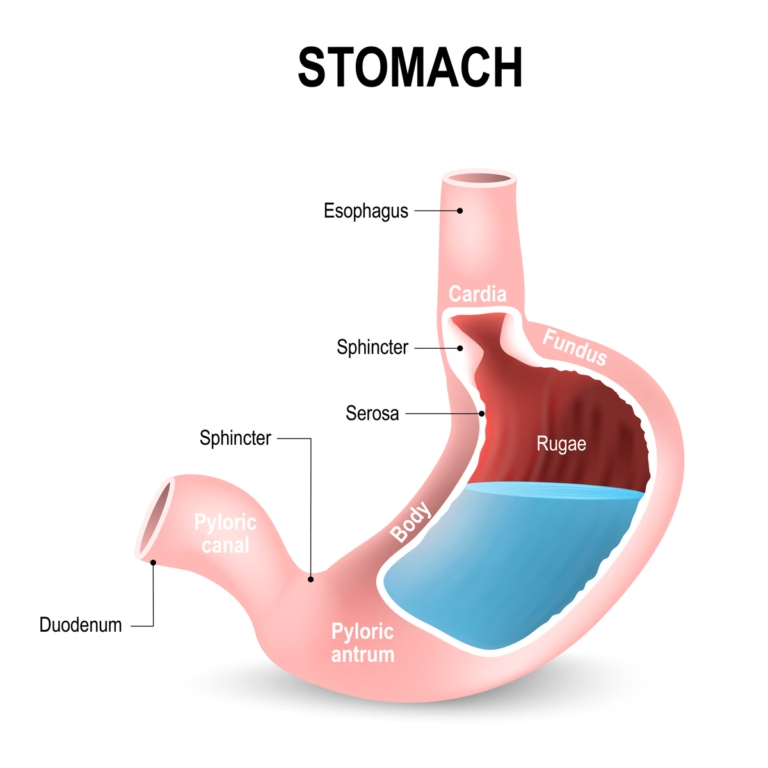
To make the following explanations easier to understand, let us first take a look at the structure of the stomach and the functions of its most important areas. This will help us understand the connections described below.
Schematic illustration of the stomach
The stomach is functionally and anatomically connected with several other organs. Depending on whether we look at it from the perspective of Western medicine or Traditional Chinese Medicine (TCM), these relationships are explained somewhat differently.
From a Western medical perspective the stomach works closely together with:
- the mouth, oesophagus, intestines, liver, gallbladder, pancreas and the nervous system. The vagus nerve in particular influences digestion, the stress response and gastric motility.
- The brain is also closely involved. Stress, emotions and tension can have a direct effect on the stomach.
Its main functions are the temporary storage of food, the initial digestion of proteins, disinfection, mixing and transportation of food.
The stomach protects us against pathogens through its strong gastric acid and processes our food like a small chemical factory, breaking it down into usable building blocks.
A brief look at the digestive tract
The human digestive tract is approximately 8 to 10 metres long, divided into the following sections:
- Oesophagus: approx. 25–30 cm
- Stomach: approx. 20–30 cm (highly expandable)
- Small intestine: approx. 5–7 metres
- Large intestine: approx. 1.5–2 metres
The flexibility of the stomach is remarkable. Its size and capacity depend on the amount of food consumed.
Capacity
The stomach is a muscular organ that regularly adapts to the amount of food it receives.
- Normal: approximately 1 to 1.5 litres
- When well distended: up to approximately 2–3 litres are possible. It can expand considerably and take on a more “sac-like” shape.
Location and Structure of the Stomach
The stomach is located in the upper abdomen, slightly to the left of the body’s centre line. The stomach wall itself consists of strong layers with longitudinal, circular and oblique muscle fibres.
A thin membrane, or serosa, covers the outer wall of the stomach. On the inside, the stomach is lined with a mucous membrane with a highly folded surface, numerous glands and many small pits.
Connective tissue containing blood vessels connects the mucous membrane with the muscular tissue.
The entrance from the oesophagus into the stomach is the cardia, followed by the upper part of the stomach, the fundus, the middle section, the body (corpus), and the lower section, the antrum. In these areas, food is mixed with gastric acid and enzymes. The exit, the pylorus, forms the transition from the stomach to the duodenum.
The ring-shaped muscles at the cardia and pylorus are called sphincters. The cardia helps prevent reflux by preventing stomach contents from flowing back into the oesophagus. The pylorus, on the other hand, controls gastric emptying by releasing the food mixture into the duodenum in portions.
Within the stomach lining, the gastric glands produce the strongly acidic gastric juice (succus gastricus), which consists of hydrochloric acid, mucus, enzymes—especially pepsin—and intrinsic factor, which is important for vitamin B12.
The different cell types of the stomach lining have specific functions
- Parietal cells produce hydrochloric acid as well as intrinsic factor, which is necessary for the transport and absorption of vitamin B12 in the small intestine. They also release bicarbonate into the blood, contributing to acid-base balance and the buffering capacity of the blood.
- Hydrochloric acid activates enzymes, kills bacteria and denatures proteins.
- The enzyme pepsin initiates the first major breakdown of animal proteins.
- Mucus-producing cells form a protective mucus layer that protects the stomach wall from the aggressive acid, as the pH of gastric juice is approximately 1–1.5. This very low pH is particularly important because these processes function in this strongly acidic environment. Approximately 3–4 litres of gastric juice are produced every day. The secretion of gastric juice is regulated by nerve impulses and the following hormones:
- Gastrin: increases hydrochloric acid production by the parietal cells and promotes the release of pepsinogen.
- Histamine: acts locally and increases acid secretion by the parietal cells.
- Somatostatin: acts as an antagonist. It inhibits the release of gastrin and therefore indirectly reduces acid production.
- Secretin (from the small intestine): inhibits gastric acid secretion when acidic food contents enter the small intestine, where the environment becomes alkaline again.
- Cholecystokinin: also tends to inhibit gastric emptying and secretion.
The vagus nerve (parasympathetic nervous system) also plays an important role. Through nerve impulses, it promotes the release of gastrin and directly stimulates the glandular cells.
The diaphragm, whose main function is breathing, also has an indirect mechanical role. Together with the sphincter, it supports closure between the oesophagus and stomach. This is important for preventing reflux.
Reflux and Heartburn – A Sphincter Problem, Not an Acid Problem
In reflux, gastric acid flows back from the stomach into the oesophagus, where it can cause irritation, inflammation and, in some cases, ulcers. Here, according to the perspective presented in this article, the sphincter is the problem rather than the acid itself.
The question is: Why does the sphincter not close completely?
One of the main factors is diet and lifestyle. Over the past 30–40 years, it has become increasingly common to eat the main meal in the evening. Added to this is frequent snacking during the day and even after dinner—or instead of dinner.
According to biological rhythms, our bodies are designed to take in most of our food during the day and eat only lightly in the evening. We do not need an extra portion of energy before going to sleep. The body enters its regeneration phase. At least four hours before going to bed, no more food should be consumed.
What happens when we eat a large meal in the evening?
We may still be sitting in an armchair or on the sofa and then go to bed. The stomach moves upwards against gravity towards the lower oesophageal sphincter. At that moment, the person may feel as though they are having a heart attack, when in fact it may be heartburn or reflux because the sphincter cannot relax properly.
This sphincter lies between the lungs, directly above the diaphragm. If the abdominal muscles and diaphragm are weak, the sphincter may also become weaker.
For this reason, when experiencing such symptoms, it is particularly important to train breathing—especially nasal breathing—and strengthen the core muscles daily. Push-ups can be a valuable form of exercise. In addition to strengthening the abdominal and diaphragmatic muscles, this exercise also strengthens the spine.
Stress, anxiety and anger—often even unconsciously—can further aggravate the situation.
In addition to an early, light meal, ideally no later than 7 p.m., together with the training and breathing exercises mentioned above, this situation may improve considerably and, according to the perspective presented here, potentially even resolve.
Snacking throughout the day—for example, a biscuit here, a few nuts there, a sweet, some gummy bears or a rice cake—may seem insignificant. Yet according to the approach presented here, frequent snacking places continuous demands on our digestive enzyme production.
Another issue is that many people drink large amounts during meals or shortly before or afterwards. According to this perspective, this can dilute gastric acid. Pepsin, however, requires a strongly acidic environment, and therefore pepsin activity may be reduced.
The result is that protein is not fully digested in the stomach. It has also been observed that gastric acid production can decline with age.
It has also been suggested that, not only for the stomach but for the body as a whole, it may be beneficial to eat twice within 24 hours, approximately six hours apart. A meal takes around 3.5–4 hours to digest, after which the stomach has time to prepare new enzymes and digestive juices for the next meal.
The myth of gastric acid
- We need to recognise that the stomach is an extremely finely regulated system with two “valves”—the cardia and pylorus—that control when stomach contents enter and leave.
- Gastric juice may become less acidic over time, meaning that its pH increases. This process is influenced by diet, stress, lifestyle and age.
Conclusion: It is not simply a matter of “too much” or “too little” acid. Rather, the interplay between acid quality, the function of the “valves” and lifestyle is important.
Vitamin B12 and Stomach Acid
There is also a common assumption regarding vitamin B12 that deserves closer consideration.
B12 is produced by bacteria and requires intrinsic factor for absorption. Intrinsic factor is produced in the stomach and released into the small intestine, where B12 binds to it and is subsequently absorbed in the final section of the small intestine, the ileum. If gastric acid is low, intrinsic factor may also be reduced.
Animals obtain B12 through their diet and microbial exposure. Due to modern animal husbandry and feeding practices, mineral and vitamin mixtures are often routinely provided to livestock. Vitamin B12 is also included.
Protein Digestion: Why More Protein Doesn't Automatically Help
Regardless of whether the recommendation comes from a doctor, nutritionist or another health professional, protein has become a major focus of nutritional advice in recent years.
What is often hardly discussed, however, is whether the body can actually process all of this protein.
A simplified explanation of protein digestion
Protein digestion takes place in several stages:
First, protein from foods such as meat, fish and poultry enters the mouth, where it is chewed and swallowed. In the stomach, actual protein digestion begins. The enzyme pepsin initially breaks down protein molecules into smaller components known as polypeptides. These then enter the small intestine, where they are further broken down by enzymes from the small intestine and pancreas. Important enzymes include trypsin, chymotrypsin and various peptidases.
These enzymes progressively break the polypeptides down into smaller units:
- first into smaller peptides
- then into dipeptides and tripeptides, consisting of 2–3 amino acids
- and finally into individual amino acids
These individual amino acids can then be absorbed through the small intestinal lining into the bloodstream and used by the body.
Where does this protein come from—and what else does it bring with it?
Protein is not a “light snack”. It requires a strong digestive system, including strong digestive juices and sufficient gastric acid. The saying “to be in good health, you need to be in good digestive juice” does not come from nowhere. And this is where the misconception lies.
More protein does not necessarily help if the body is overwhelmed or if gastric acid is too weak and insufficient enzymes are available. The real bottleneck is therefore not necessarily the amount of protein, but the digestive capacity, which depends, among other things, on gastric acid, enzymes and digestive juices.
Protein, like all nutrients and vital substances, is important for the body.
At the same time, it is one of the more demanding nutrients to digest. This is precisely why it is worth reconsidering protein intake, particularly at a time when a large proportion of people may have a weakened digestive system.
Again, in the current protein trend, this important aspect is often overlooked: digestion—and therefore the stomach—determines what the body can actually absorb.
If this system is impaired, protein may not be properly broken down in the stomach. As a result, incompletely digested proteins may enter the small intestine, where digestion and absorption should normally be completed. If they remain undigested, they may reach the large intestine, where they are broken down inadequately by bacteria.
Fermentation and putrefactive processes can then occur. Intestinal bacteria can produce gases such as hydrogen, methane and sulphur compounds, as well as metabolic products such as ammonia and biogenic amines, which can in turn place an additional burden on the liver.
We can therefore eat as much protein as we want, but if it is not properly digested, it cannot reach the bloodstream. And if it does not reach the bloodstream, it cannot be used by the body. From this perspective, eating the building blocks of protein—amino acids—may be easier for the body because they require less digestive processing. These can be obtained through plant-based foods.
Helicobacter Pylori – The Oversimplified View
First, the question arises: Why is Helicobacter pylori present in the stomach in the first place?
The stomach is lined with a protective mucous membrane. This mucus protects the stomach wall from strong gastric acid.
Adequate fluid intake and minerals are also important for healthy mucous membranes. If the body is generally dehydrated, mucous membranes may become drier and more sensitive, potentially weakening their protective function.
If these protective mechanisms in the stomach are impaired, acid can affect the mucous membrane and cause irritation or damage. This can lead to inflammation of the stomach lining and may be associated with stomach pain.
According to the perspective presented here, the bacterium Helicobacter pylori, which occurs in the stomach, may contribute to preventing such irritation or damage. When someone experiences corresponding symptoms, a breath test can be performed to detect Helicobacter pylori. If the bacterium is found, treatment with antibiotics is commonly used with the aim of reducing inflammation and relieving the burden on the stomach lining.
According to the approach described here, one of the main factors affecting Helicobacter pylori is gastric acid. It may be helpful to avoid drinking during meals and to wait 1–1.5 hours after eating before drinking again, whether water or herbal tea. Drinking should also be avoided for approximately one hour before a meal, unless necessary supplements are being taken, in which case a small sip of water can be used. If fluids are consumed primarily between meals, gastric acid can be released during meals when eating begins.
Other ways of stimulating gastric acid mentioned here include bitters, lemon juice, ginger or turmeric. Each person can discover what works best for them and what they tolerate well.
l. According to this perspective, gastric acid can eliminate H. pylori, allowing the body to heal itself.
In practice, the treatment of Helicobacter pylori often directly involves the use of proton pump inhibitors (PPIs) – medications that reduce the production of gastric acid
After years of an exhausted acid-base balance due to stress, eating quickly, constant snacking or eating late, one possible consequence may be that the parietal cells of the stomach become exhausted because they have continuously had to counteract this state with sodium bicarbonate.
Put simply, the analogy is sometimes made with insulin production by the pancreas. If someone consumes large amounts of sweets and heavy foods for years, the risk of developing type 2 diabetes increases. In the case of the stomach, the idea is that the parietal cells may eventually respond less effectively to the regulatory hormone gastrin. This is sometimes referred to as gastrin resistance, comparable to insulin resistance in type 2 diabetes. As a result, less hydrochloric acid may be produced and the digestive capacity of the stomach may decline. This can contribute to symptoms such as increased belching. When proton pump inhibitors are used and gastric acid production is reduced further, the question arises as to how this affects digestion and symptoms such as belching. From the perspective presented here, suppressing the symptom may simply shift the underlying problem further down into the digestive tract.
Langfristig kann es nicht nur zu einem Mangel an Eiweiss oder Vitamin B12 kommen. Auch viele weitere Mineralstoffe und Nährstoffe sind auf ein ausreichend saures Milieu angewiesen, damit sie aus der Nahrung gelöst und aufgenommen werden können. Dazu gehören beispielsweise Eisen, Kalzium, Magnesium, Zink, Folsäure, Kupfer und Phosphor.
In the long term, deficiencies may involve not only protein or vitamin B12 but also a number of other minerals whose solubility and absorption are influenced by gastric acid.
Some examples include iron, calcium, magnesium, zinc, folate, copper and phosphorus.
If the absorption of these nutrients is impaired over a longer period, deficiencies may develop and can be associated with health problems such as osteoporosis, weakened immunity, anaemia or tingling sensations.
The stomach from the perspective of Traditional Chinese Medicine
Having looked at the stomach from a Western medical perspective, let us now take a look at Traditional Chinese Medicine (TCM), which describes the stomach from a holistic and functional perspective. I find this perspective particularly interesting and enriching because it places the stomach within a larger functional context and offers additional ways of thinking about digestion.
Unlike Western medicine, TCM does not consider the stomach in isolation but as part of an energetic network within the body.
According to this view, it is closely connected with:
- the spleen (thoughts and overthinking)
- the pancreas (transformation and utilisation of food into life energy)
- the liver (emotions and energy flow)
- the heart (mental calm)
- the lungs (distribution of energy throughout the body)
In TCM, the spleen has been regarded for centuries as one of the most important digestive organs.
From this perspective, digestion begins through the interaction of the spleen, pancreas and stomach. These organs transform our food: they extract its essence and convert it into energy and blood. This nutritional energy is called Gu Qi. The stomach acts like a cooking pot: it receives the food and softens it. The spleen, in turn, is the fire beneath the pot. It provides the power needed for the food to be “cooked”, transformed and utilised.
Together, the stomach and spleen form our personal digestive kitchen.
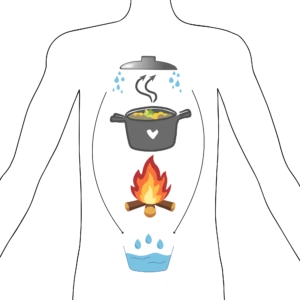
When the so-called Spleen Fire is strong enough, we feel pleasantly energised after eating. Digestion functions calmly and regularly, the stool is well formed and the body can absorb nutrients effectively.
When this fire becomes too weak, food can no longer be fully transformed. From the perspective of TCM, the result is the accumulation of “dampness”. Undigested residues accumulate, and both body and mind can feel heavy and sluggish.
Typical signs of Spleen deficiency may include:
- tiredness after eating
- bloating and a feeling of fullness
- soft stool or diarrhea
- cravings for sweets
- cold hands and feet
- a bloated abdomen
This raises the particularly interesting question: What weakens the Spleen Fire?
From the perspective of TCM, in particular:
- cold and raw foods
- eating hastily or unconsciously
- too many ingredients at once
- eating under stress
According to TCM, a cold smoothie in the morning can be compared to repeatedly pouring water onto a campfire. The spleen loves warmth, calm and regularity.
That is why strengthening the “middle” often begins with simple things: eat a warm breakfast, eat slowly, chew thoroughly, eat without distraction and remain seated quietly for a moment after the meal.
The TCM body clock also illustrates how important rhythm can be for our digestion. The body is constantly communicating with us. Digestive problems, fatigue or pain are often not random but may be signals that something is out of balance. A deficiency—for example, a weakness of the digestive “fire”—may also be associated with insufficient vital nutrients, potentially affecting energy and well-being, bones, digestion, the nervous system and the immune system.
Conclusion: Rhythm, Rest, and Understanding Instead of Treating Symptoms
Ultimately, the goal is not to look at individual symptoms in isolation, but to understand the connections between them. The stomach, intestines, nutrient absorption, lifestyle and our inner state are closely interconnected. Often, it is not major changes but more conscious eating, greater rhythm and a better understanding of our body’s signals that can provide the first step towards greater well-being.
With kind regards,
Sonja Bacus
Nutrition and Vital Nutrient Consultant